



Do Not Overtake Turning Vehicle Signs on Caravans: What the Law Actually Says
That “DO NOT OVERTAKE TURNING VEHICLE” sign isn’t reserved for big, burly trucks. Many caravan combinations qualify to display one — and when a tight turn requires extra lane space, having the correct sign can be a legal requirement.

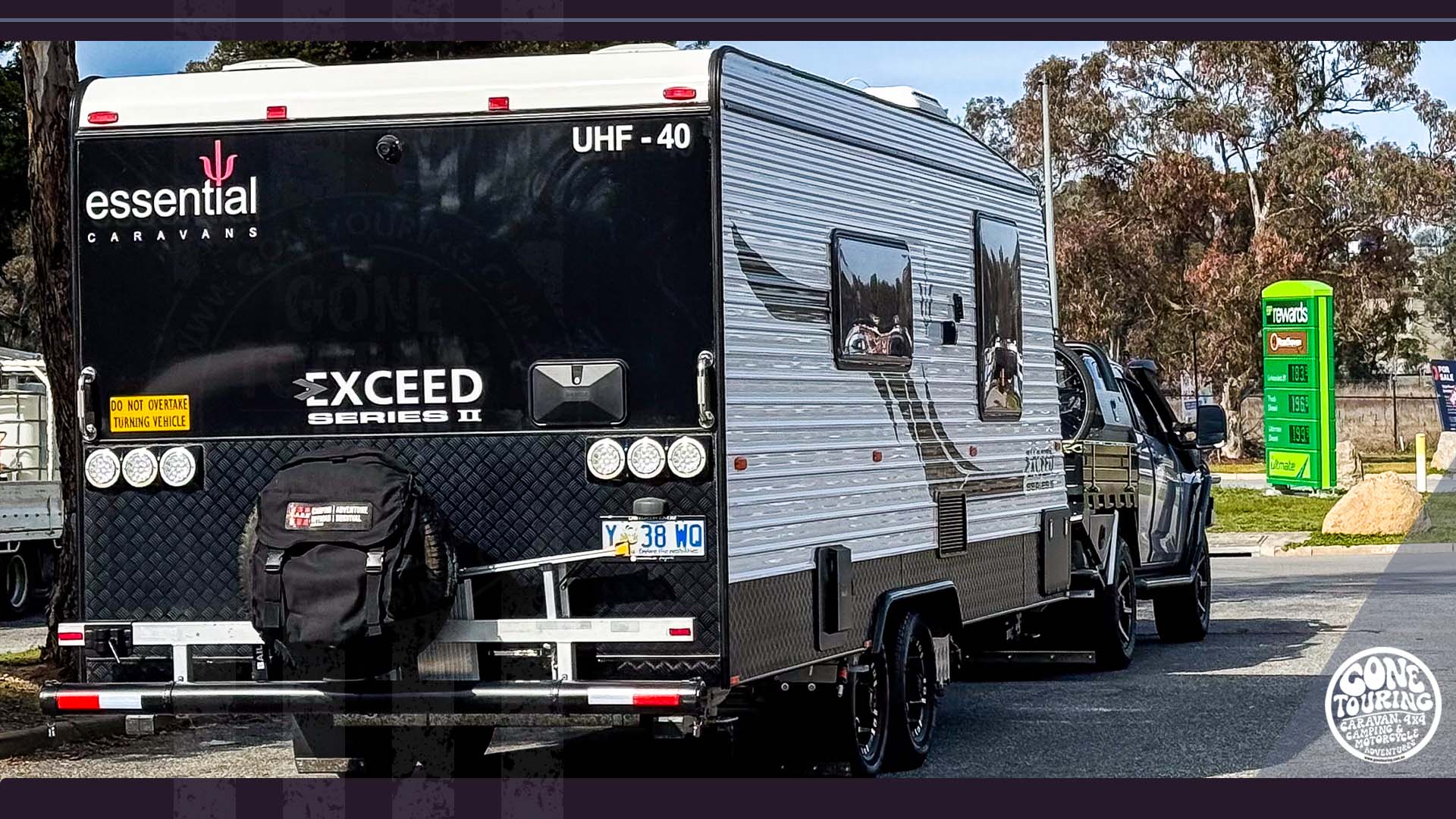
A Do Not Overtake Turning Vehicle sign fitted to the rear of a caravan. For qualifying combinations, the sign warns other motorists that the vehicle may need additional road space when negotiating a turn.
Spend enough time towing a caravan and eventually you’ll encounter an intersection apparently designed by somebody who believed every vehicle on the road was a Hyundai Getz.
The corner is tight. There’s a traffic island exactly where you don’t want one, a kerb waiting eagerly for your caravan tyres and a car sitting alongside whose driver has absolutely no idea where the caravan is about to go.
This is precisely where a DO NOT OVERTAKE TURNING VEHICLE sign becomes considerably more important than another sticker decorating the back of the van.
And despite what you might hear around caravan parks, it isn’t simply a truck sign.
A sufficiently long tow vehicle and caravan combination can qualify to display it. When the relevant road-rule conditions are met, that combination can also use additional lane space to negotiate a turn.
The important words are when the conditions are met.

Many modern caravan combinations easily exceed 7.5 metres overall, but length alone does not give the driver unrestricted permission to occupy adjoining lanes when turning.
The magic number is 7.5 metres
That doesn’t mean a 7.5-metre caravan. It means the complete combination: the tow vehicle and caravan as coupled, including any projecting load counted in its overall length.
With many dual-cab utes measuring around five metres before you’ve attached anything, plenty of touring combinations comfortably exceed that threshold.
The National Heavy Vehicle Regulator’s Vehicle Standards Bulletin 12 (VSB12) explains that the turning-warning requirement applies to light as well as heavy vehicles and combinations, under the relevant jurisdiction’s road rules. NHVR VSB12
Queensland’s towing guidance makes the practical distinction clear: a tow vehicle and trailer combination measuring 7.5 metres or longer may carry the sign, and it is mandatory if the combination needs to straddle two lanes to make sharp turns. Queensland Government towing guidance
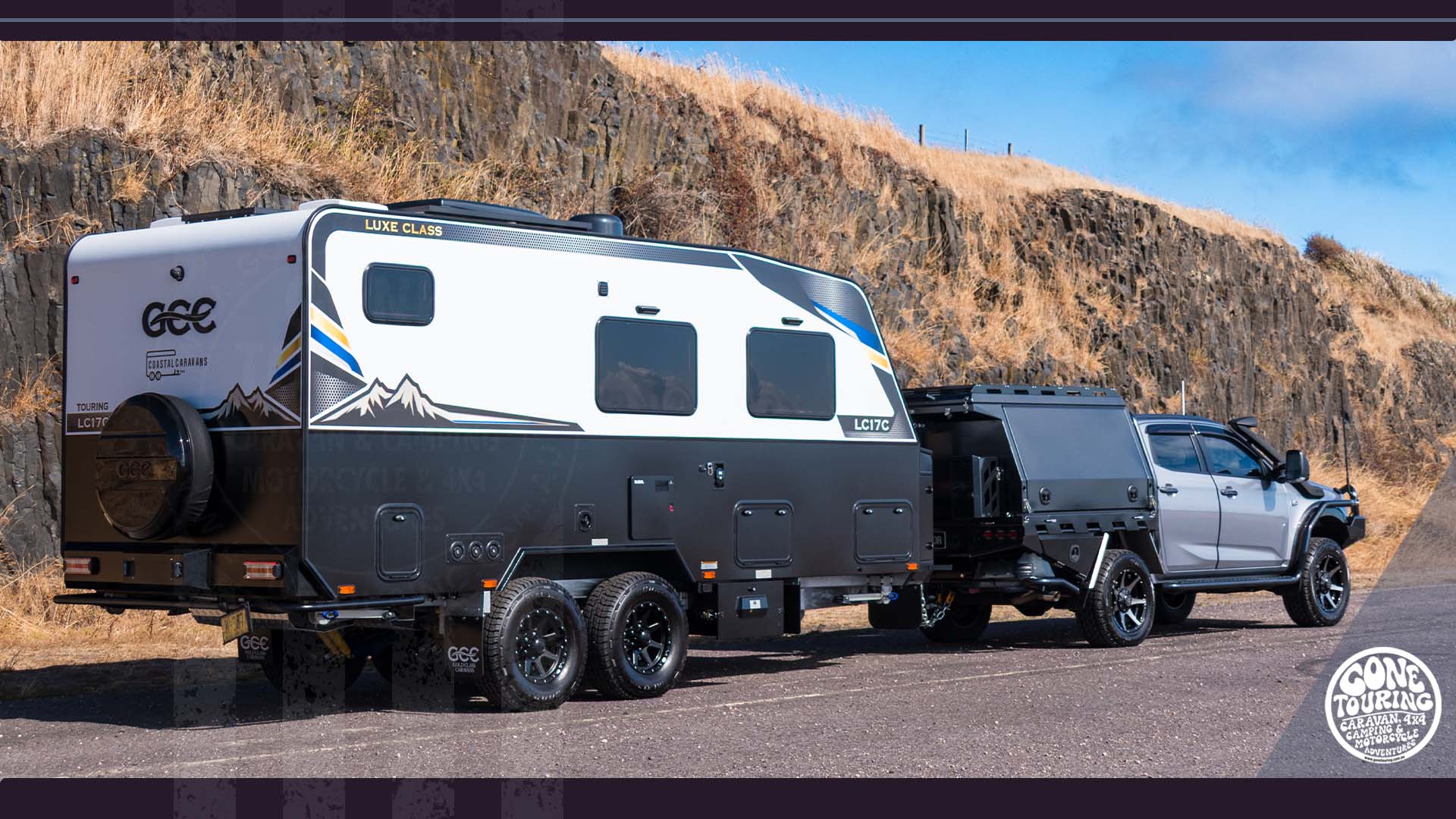
So no, you don’t need to own a Kenworth or a Mack truck. A dual-cab ute, a decent-sized caravan and enough belongings to suggest you’re relocating rather than holidaying can comfortably put you in the relevant length category.

The yellow Do Not Overtake Turning Vehicle sign warns following motorists that a long caravan combination may need to use additional road space when turning.
What does the sign actually allow you to do?
Normally, you must approach a turn from the lane required by the road rules, signs and lane markings.
Unfortunately, the caravan follows the laws of geometry, which remain stubbornly indifferent to the council’s line-marking arrangements.
The rules recognise this. For example, NSW’s provisions for approaching a left or right turn from an adjacent marked lane require:
- A vehicle or combination at least 7.5 metres long.
- The appropriate DO NOT OVERTAKE TURNING VEHICLE sign.
- Some part of the vehicle to be within 50 metres of the nearest point of the intersection.
- A turn that cannot practicably be made from the normal lane.
- Enough room for the driver to occupy the adjacent lane and turn safely.
Related provisions address long vehicles at multi-lane roundabouts and straddling marked lanes near a turn. These are conditional exceptions, not a general entitlement to choose any convenient lane. NSW Road Rules, rules 28, 32, 111 and 146
The Australian Road Rules provide the model for many of these provisions, but the enforceable rules are those adopted by each state or territory.
For caravanners, the practical benefit is straightforward: where the applicable conditions are satisfied, you can use the extra road space needed to get around the corner safely.
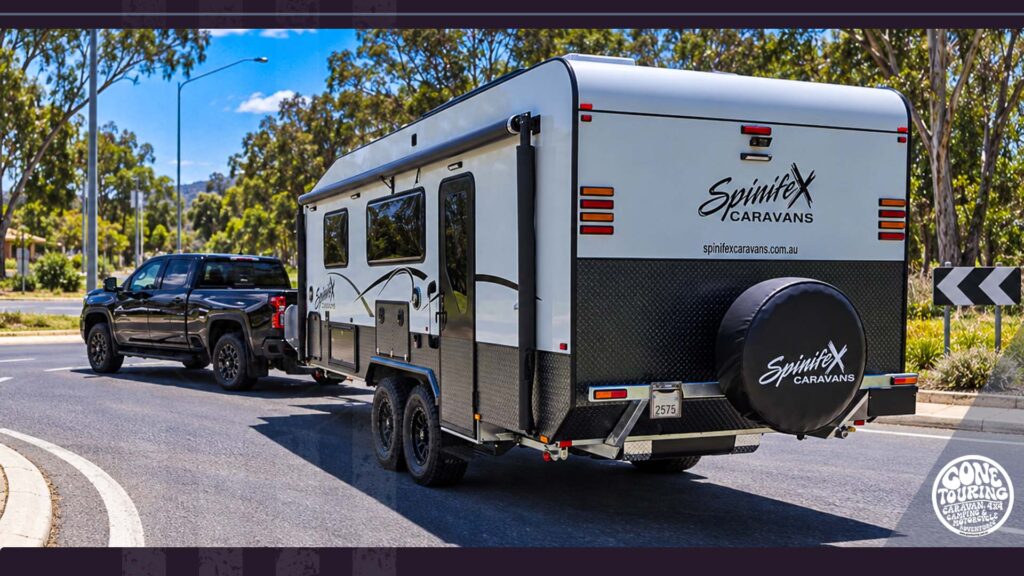
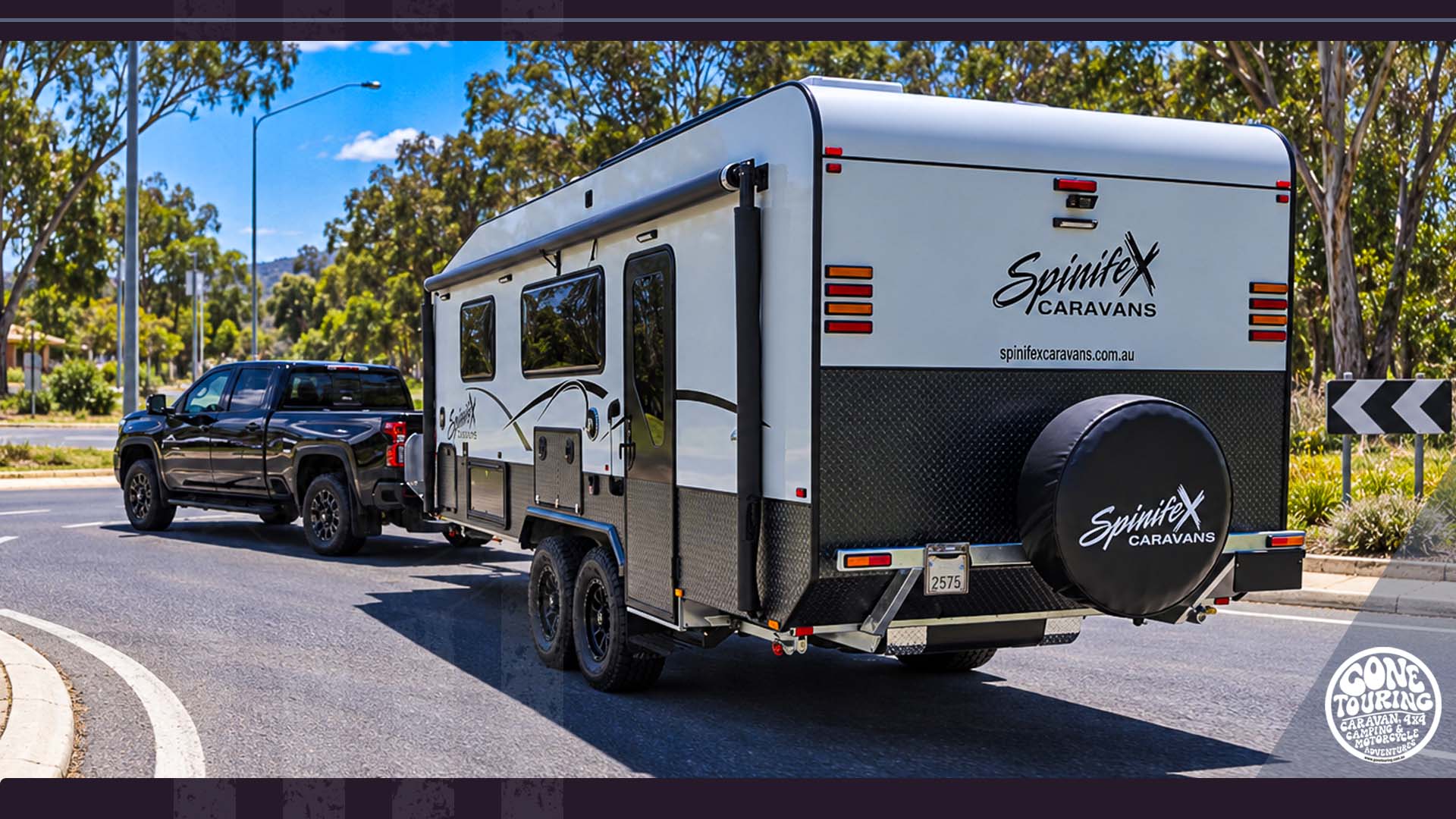
Roundabouts can highlight just how much room a long caravan needs. The tow vehicle may follow the marked lane while the caravan wheels track considerably further towards the inside of the turn.
Why caravans need room to turn
Anyone who has driven articulated heavy vehicles will be familiar with off-tracking. Caravanners need to understand it too.
During a tight, low-speed turn, the caravan’s wheels generally follow a path inside that taken by the tow vehicle. Clearing the corner with the ute doesn’t necessarily mean the caravan will clear it.
How much room you need depends on the combination’s dimensions and the tightness of the turn. Bodywork extending behind the caravan’s axle group can also swing outwards.
Consequently, the driver may need to position the combination further from the inside of the corner before turning.
And that’s where things can become dangerous.
Imagine a caravan driver indicating left. To clear the kerb and an inconveniently placed light pole, the driver positions the tow vehicle towards the right of the lane or, where permitted and safe, occupies part of the adjoining lane.
The impatient motorist behind sees daylight down the left-hand side. “Excellent. He’s moved over” the impatient motorist thinks.
No, he hasn’t.
He’s about to bring several tonnes of caravan through exactly that piece of road.
The gap may look like an invitation. It is actually space the caravan needs to complete the turn.
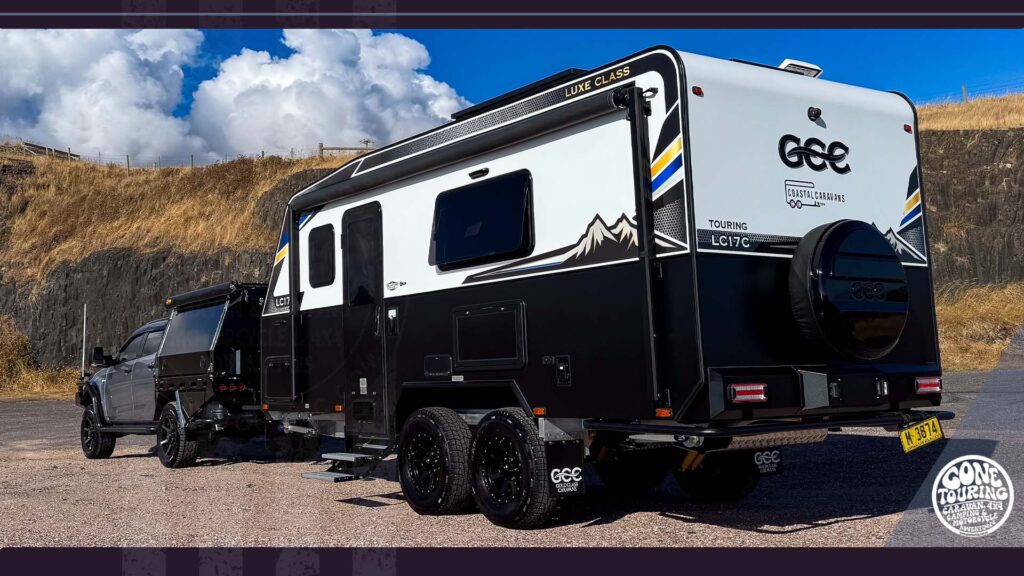
Modern caravan combinations can be considerably longer than many passenger vehicles, which is why drivers need to understand off-tracking, turning space and the 7.5-metre rules.
What must the other driver do?
Specific road rules govern passing a vehicle displaying a DO NOT OVERTAKE TURNING VEHICLE sign.
For example, Queensland’s rule 143 restricts passing on the side towards which a signed vehicle is signalling and turning, with exceptions where passing is safe. The precise wording matters: the sign is not a blanket ban on every vehicle passing in every circumstance. Queensland Road Rules, rule 143
The practical message for other motorists is simple: don’t squeeze into the space a turning combination needs.
That apparently inviting strip of bitumen beside the caravan may disappear rapidly once the turn begins. Hanging back gives the driver room to complete the manoeuvre and saves everybody a roadside discussion they would rather not be having.

The critical measurement is the overall combination, not simply the length of the caravan. A tow vehicle and caravan can easily exceed the 7.5-metre threshold relevant to the turning-vehicle rules.
But the sign is not a magic force field
This is probably the most important point for caravan owners.
Displaying the sign does not give you permission to select whichever lanes you fancy and expect everybody else to scatter.
Before relying on the extra-lane provisions, ask:
- Is the combination eligible and correctly signed?
- Is the extra space necessary?
- Can the manoeuvre be completed safely?
If your caravan can readily negotiate the corner from the normal lane, the sign doesn’t provide a licence to turn the intersection into your own private road.
You still need to indicate correctly, check mirrors and blind spots, account for vehicles already beside you and comply with the applicable give-way rules.
Nor does the sign make a sudden swing into an occupied lane acceptable.
Think of it as part of the legal framework allowing a long combination to use the space it needs. It doesn’t confer automatic right of way.

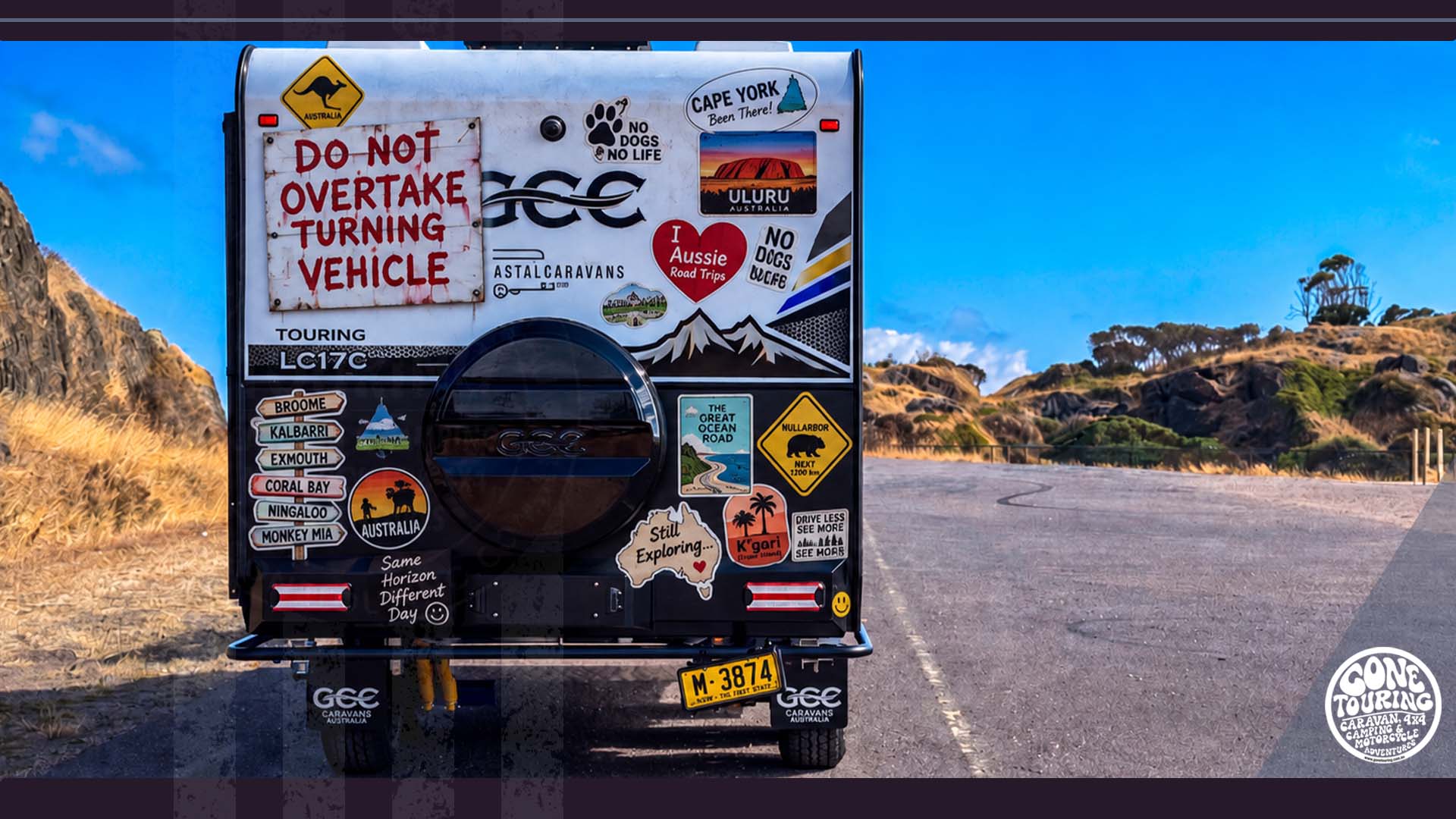
A well-travelled caravan wears a crudely hand-painted DO NOT OVERTAKE TURNING VEHICLE sign along with a collection of “I’ve been everywhere” style travel stickers, giving the rear panel a distinctly humorous outback-touring personality.
Don’t make your own sign in the shed
There’s another trap.
Having the words DO NOT OVERTAKE TURNING VEHICLE cut from vinyl, or worse painted freehand in black paint doesn’t, by itself, establish that you have a compliant sign.
VSB12 covers rear marking plate designs, materials and installation requirements. Buy signage manufactured to the applicable specification and follow the fitting instructions, including its position at the rear of the caravan. Keep it clean, visible and in good condition. NHVR rear marking plate guidance
The sign needs to be seen before it can warn anybody.
This can become a challenge when the back of the caravan has developed an “I’ve Been Everywhere” theme. What began as a modest souvenir from Birdsville has expanded into a geographical record of such completeness that the spare-wheel cover is now needed to accommodate South Australia.
There’s nothing wrong with being pleased about where you’ve been. Some of those stickers represent considerable distances, memorable adventures and at least one road your spouse has asked you never to mention again.
But give the warning sign some clear space. The motorist behind needs to know you’re about to make a wide turn, without first having to establish that you enjoyed the bakery at Oodnadatta.
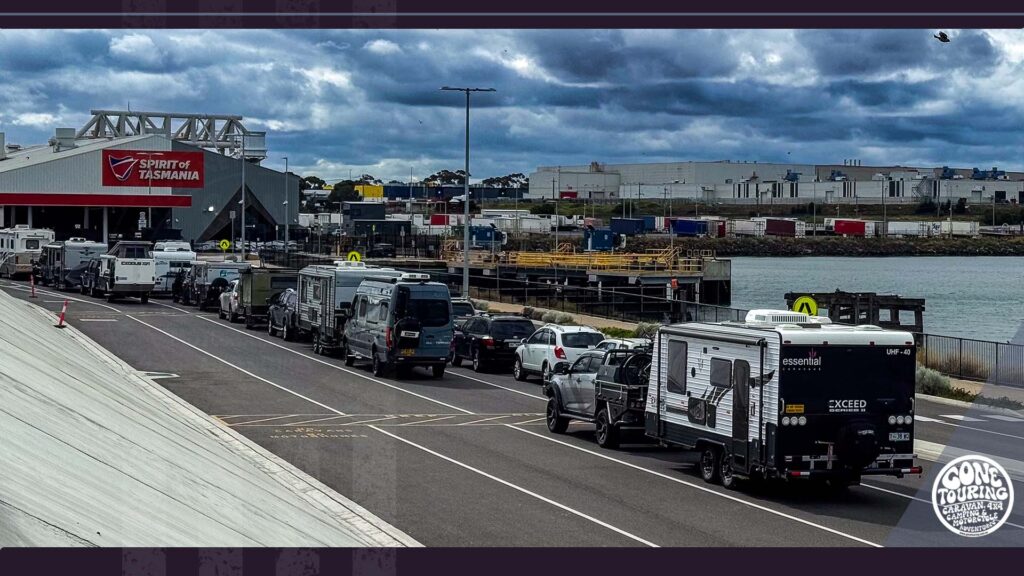
Caravan combinations often encounter confined turning areas around ferry terminals, service stations and town centres — precisely where understanding the Do Not Overtake Turning Vehicle rules becomes important.
Should every long caravan have one?
Exceeding 7.5 metres doesn’t, by itself, mean every combination must carry the sign.
The crucial distinction is whether you need to use the turning provisions that require it.
If your qualifying combination needs to straddle lanes or turn from an adjacent lane under those provisions, the appropriate sign is a requirement, not an optional touring accessory.
Fit it before you need it. Halfway around a traffic island is an inconvenient moment to discover that the only warning on the back of the van concerns your lack of interest in going back to work.
Safety still comes first: indicate early, check mirrors and blind spots, position the combination deliberately and never assume the driver beside you has read the sign.
Because although the words may say DO NOT OVERTAKE TURNING VEHICLE, there will always be somebody who treats them less as a road-safety instruction and more as a personal challenge.

